

Choose one moment that affects everyone
Begin with a specific routine: leaving for a walk, coming in from the yard, or greeting someone at the door. “Listen better” is too broad to tell another person what to do.
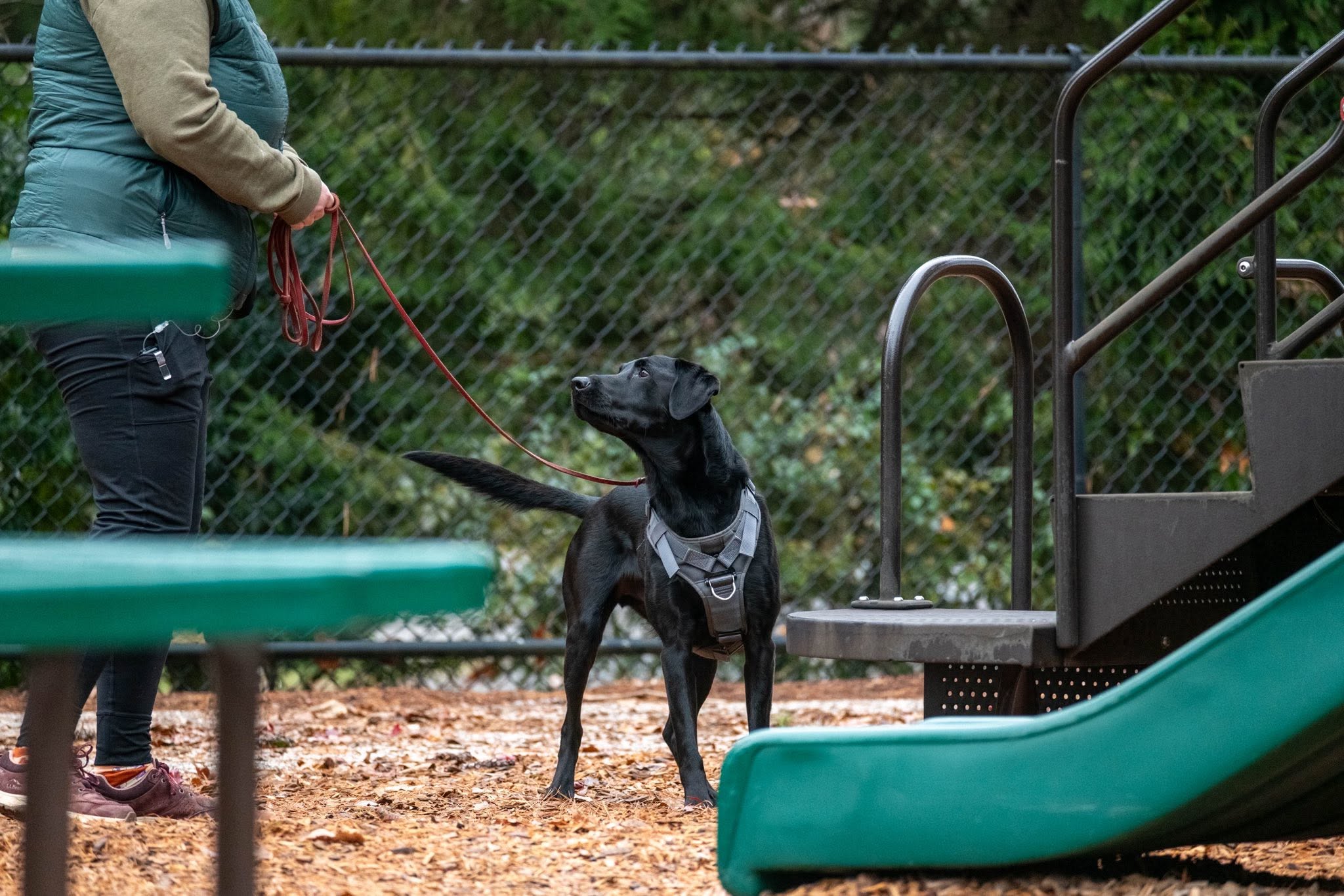
For a departure, your first goal might be standing with four paws on the floor while the leash is clipped on. That is something each person can recognize and reward. You can add the doorway and the walk later rather than trying to fix the entire outing at once.
Agree on the words and the outcome
The American Kennel Club highlights consistency in cues and household expectations. Shared words help most when people also agree on what the words mean.
Write a short entry for your chosen routine. Include the cue if your dog already knows one, what you are looking for, and how the exercise ends. Avoid introducing several new words just to fill in a chart.
- Situation: getting ready for a quiet walk.
- Goal: four paws on the floor while the leash is attached.
- Reward: something the dog values, ready before practice begins.
- If it becomes difficult: pause and return to an easier step.
Show each other instead of only explaining
Ask one person to demonstrate an easy repetition, then let another try. Small differences are easier to notice in practice: a hand signal changes, a reward arrives later, or the next person asks for a much longer wait.
Treat this as comparing notes, not grading each other. If an exercise works for one person but not another, bring that observation to a lesson. The next step may be adjusting the setup or teaching the skill with a different handler.
Make the routine convenient
Keep suitable rewards where adults can reach them, away from dogs and children. Put the short plan somewhere the people who need it will see it. A note beside the leash may be more useful than a document buried in a group chat.
Consider each person’s ability and role. Children should have age-appropriate participation with adult supervision; they should not be responsible for managing a strong dog or a difficult encounter. If someone cannot safely practice a step, assign a different part of the routine.
Review one question at a time
After several ordinary opportunities, ask: which part is going smoothly, and where are we getting stuck? For example, clipping on may be easier while opening the door still triggers jumping. That tells you where to focus next.
Bring conflicting observations to your trainer rather than adding new rules in response to every difficult day. A shared plan should be simple enough to repeat and flexible enough to improve.
A useful next step
Choose one routine, agree on a clear outcome, and practice the same easy version. Consistency is easier when everyone understands the plan.
Sources & further reading
Put a plan into practice.
Tell Emily what you are working on and find a comfortable place to begin.
Explore in-home training