
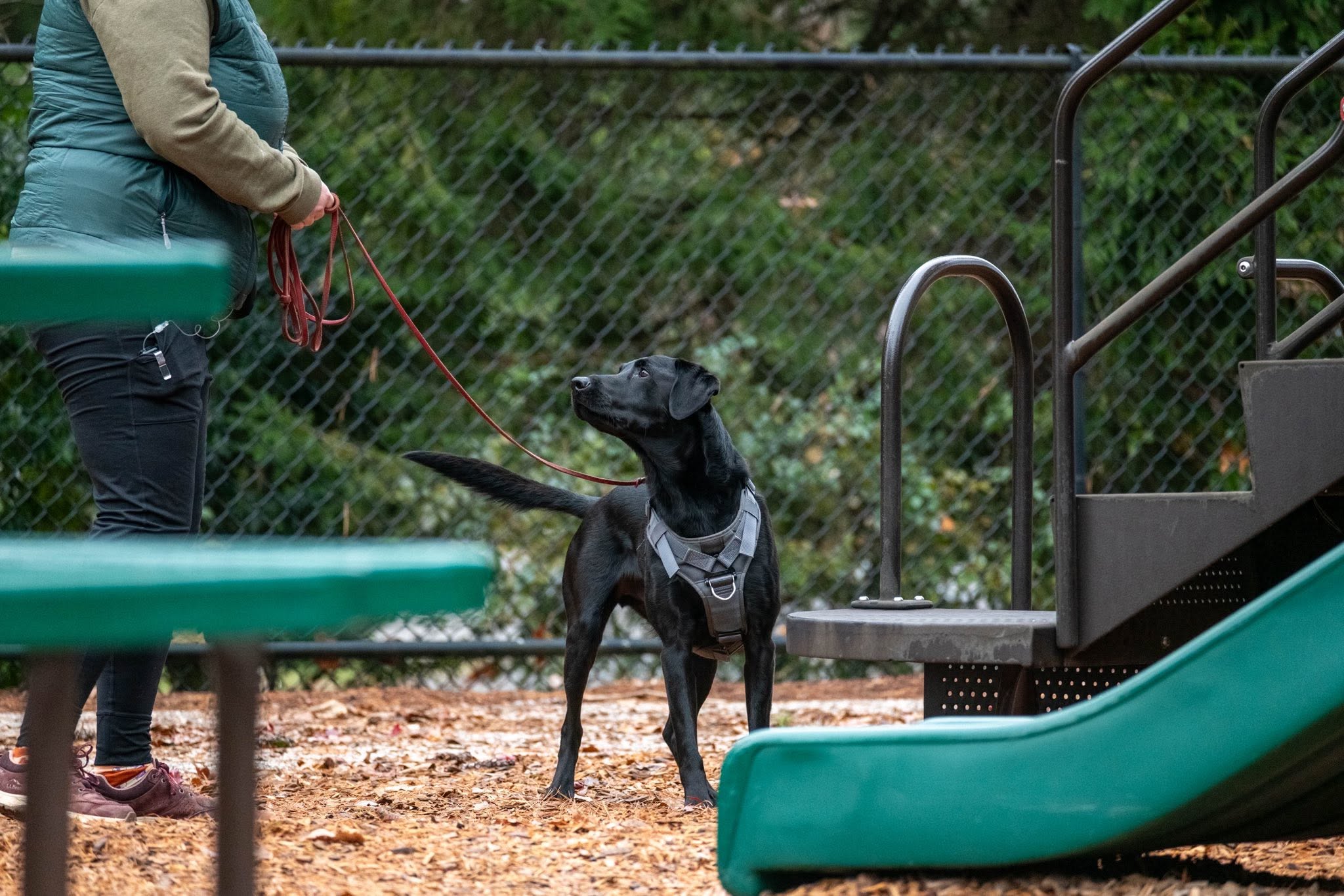
One cue can describe several different challenges
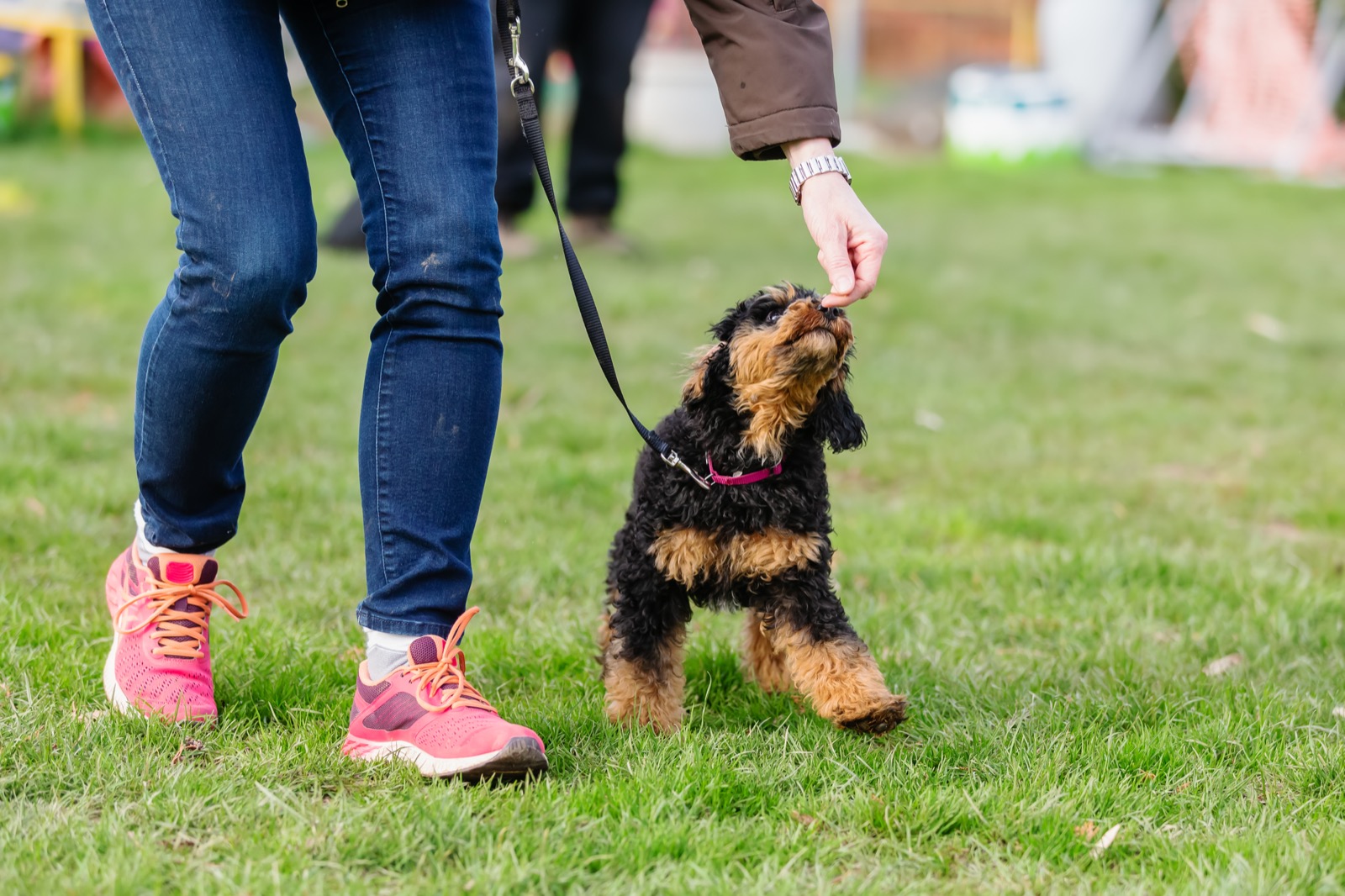
“Sit” while you stand beside your dog in the living room is different from “sit” while you walk away at a trail entrance. In the second version you may have changed the place, the distance, the duration, and the distractions.
The AKC recommends increasing distraction gradually and changing one challenge at a time. Rather than treating an outdoor struggle as proof that your dog is refusing to listen, use it to find the part of the exercise that needs more practice.
Choose a skill you can describe precisely
Pick one familiar behavior for a short practice. Write down what counts as success: turning toward you, sitting briefly, or taking two steps nearby. Avoid a goal as broad as “be good at the park.”
Then choose the smallest new setting you can manage safely. That might mean the same room with the door open, a secure yard, or a quiet section of a regular walk. You do not need to add people, dogs, traffic, and a new surface in the same attempt.
Build your own practice ladder
Make a short list that fits your dog and home. This sample shows how to think about the steps; it is not a fixed progression for every dog.
- Familiar room: ask for the easy version of the cue and reward it.
- Same room, small change: another person sits quietly at a distance.
- Familiar outdoor space: shorten the request and stay nearby.
- Quiet public setting: practice only where you have room and can leave.
Use one comparison to find the sticking point
Suppose your dog sits while you stand next to them in the yard, but gets up as you move away. Keep the yard the same and work with your trainer on distance. Moving to a busier place at the same time would make it harder to tell what helped.
Or suppose a response is easy until a bicycle appears. You can note the distance and movement without trying to arrange another close pass. Next time, choose a place where you have more room. You are collecting clues, not testing how much your dog can tolerate.
What to do after a missed response
Pause. Check whether your dog has noticed you and whether the setting is still manageable. Move to an easier spot or ask for less. Do not keep saying the cue while the situation becomes harder.
Rewards matter, but a more tempting treat is not the answer to every difficulty. If your dog is scared, intensely reactive, or unable to settle into the environment, ask for individual support. A dog who is struggling emotionally may need a different plan from one learning to hold a position a little longer.
A useful practice record takes four lines
Write the cue, setting, challenge, and result. For example: “Pause beside me; quiet path; person moving far away; responded, then we continued.” For a harder attempt: “Same path; group came close; left before trying again.”
Bring that record to a lesson. It can help you choose which variable to change next. Progress is not making every outing harder. Sometimes it is recognizing an easy place to repeat a skill and knowing when an outing should simply be a walk.
A useful next step
Keep the cue familiar and change only one part of the situation. Use the response to decide whether to repeat, simplify, or ask for help.
Sources & further reading
Put a plan into practice.
Tell Emily what you are working on and find a comfortable place to begin.
Explore dog training