
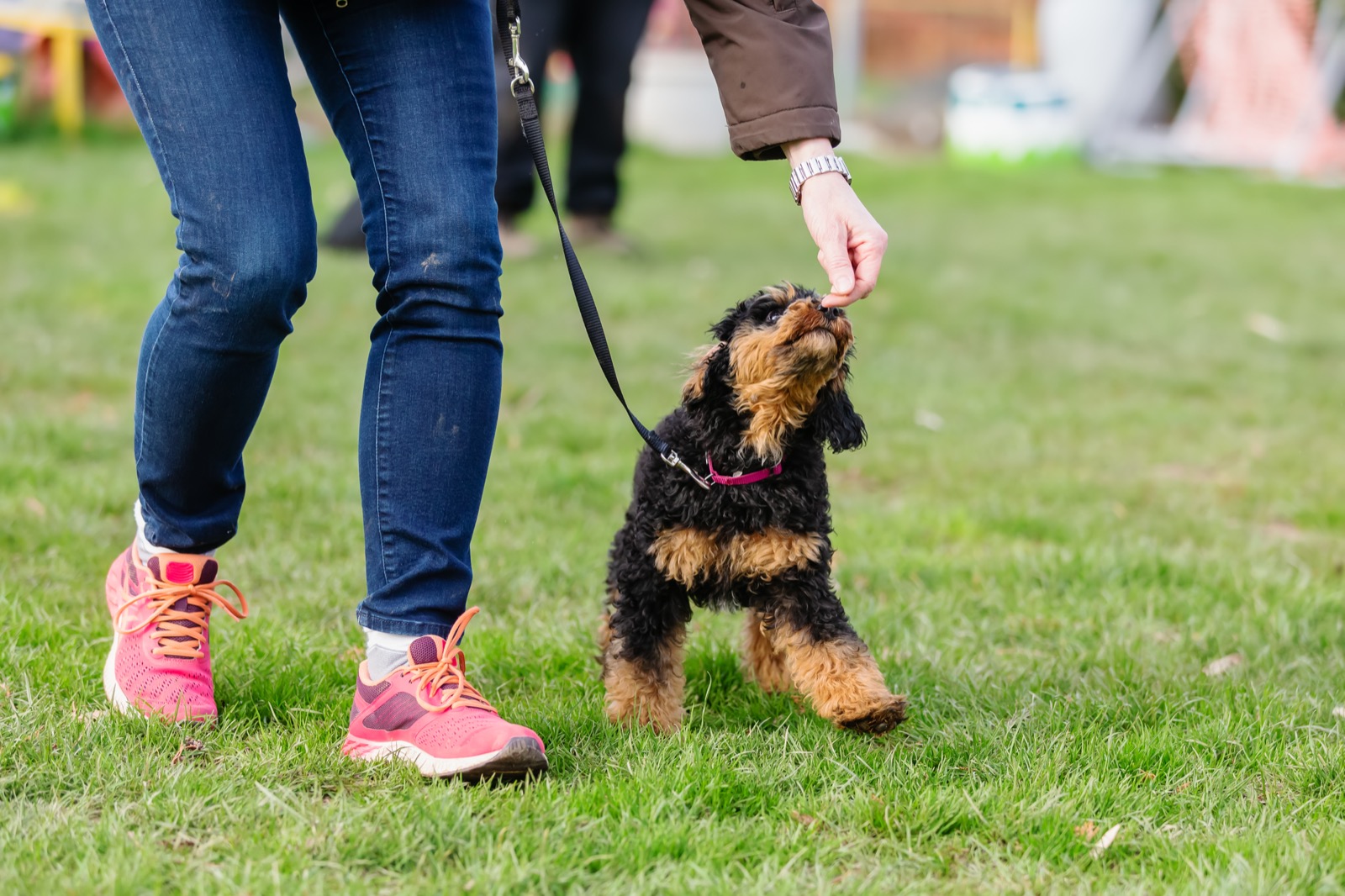
Give “check in” a small, clear meaning
For this exercise, count a turn of the head toward you as a starting point. You are noticing connection, not demanding formal heelwork. Decide what you will reward before you begin so you can respond promptly when it happens.
Keep the goal narrow. Walking on a loose leash, coming when called, and staying beside you are related skills, but asking for all of them at once makes it harder to see what your puppy is learning.
Try the game where it is easy
Begin in a quiet room or a secure familiar space. Have a few small rewards ready. When your puppy looks toward you, use a consistent marker such as “yes,” then reward. After a few easy repetitions, pause rather than trying to keep the game going indefinitely.
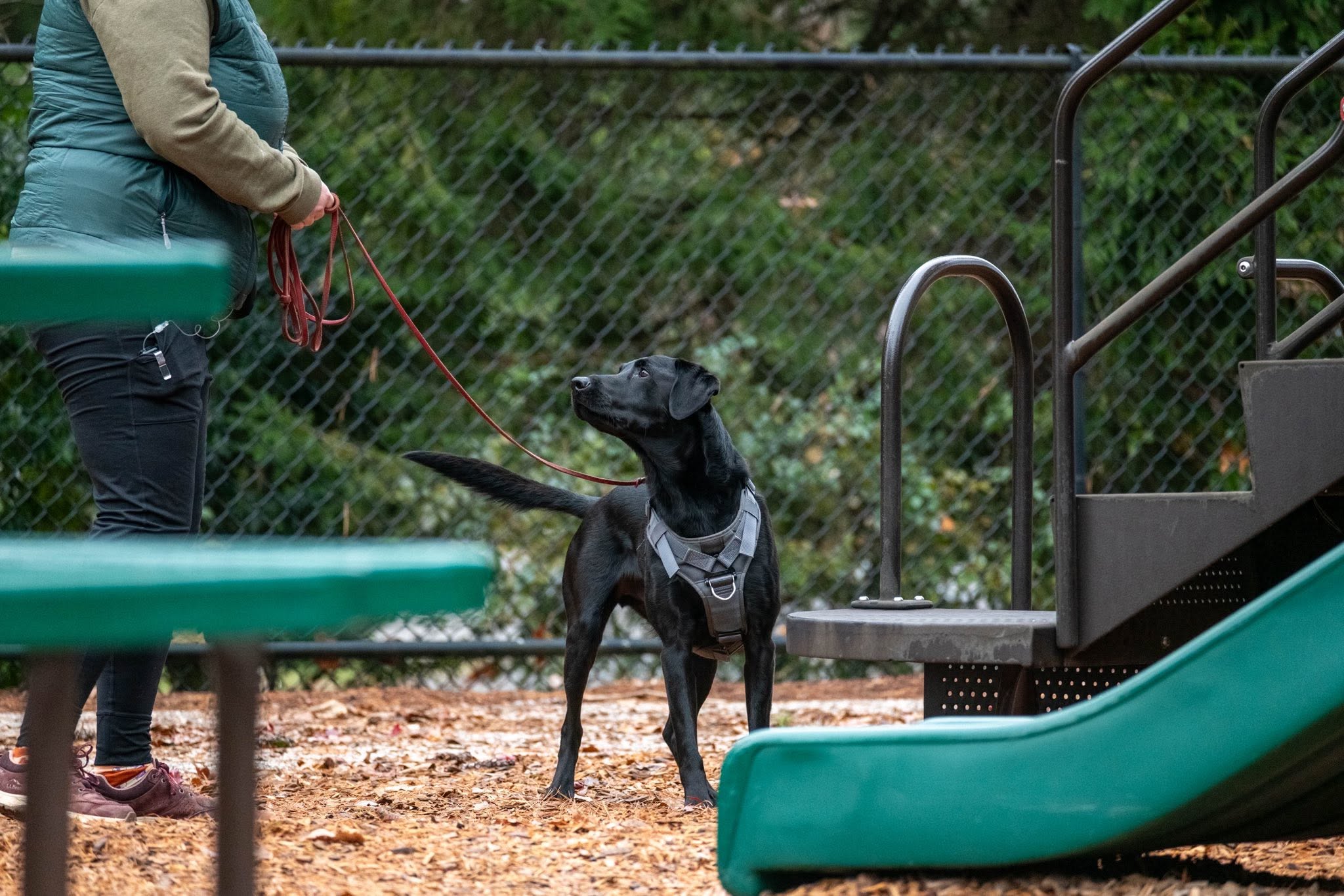
Next, take one or two steps. Reward your puppy for moving with you on a loose leash. Battersea recommends beginning in an easy environment and building up gradually, without using leash jerks to force the dog into place.
Move the game outside without adding a whole outing
Your first outdoor practice could happen in one safe spot near home. Choose a moment with little activity, give your puppy time to look around, and watch for an easy check-in.
Here is an example plan, not a required schedule: try the game in the hallway, then a secure yard, then a quiet part of your normal route. Repeat a setting whenever needed. Before choosing public locations for a young puppy, ask your veterinarian which exposures are appropriate for their health and vaccination status.
Let sniffing have a place in the walk
A check-in does not have to end the interesting part. After rewarding a turn toward you, you can let your puppy return to a safe scent nearby. Decide where it is appropriate to pause rather than interrupting every investigation.
Try planning a short route with two jobs: a manageable place to practice and a place to explore. That gives you an alternative to judging the entire walk by how often your puppy looks at you. It also helps everyone in the household understand what the outing is for.
When things get messy
If your puppy pulls continuously, do not drag them through the exercise. Reduce the challenge and choose a quieter place. If they freeze, try to flee, or seem distressed, give them space and end the practice. A reward is not a reason to draw a worried puppy closer to something they want to avoid.
- Only looks when food is visible? Ask your trainer to help separate the cue or marker from showing the reward.
- Works at home but disappears outside? Return to a smaller change of setting.
- Keeps noticing another dog? Add distance instead of repeatedly asking for eye contact.
- One good repetition, then chaos? Finish earlier next time and note what changed.
Track the setting, not just the number of looks
A useful note might say: “Quiet driveway, checked in twice, became distracted when a delivery van stopped.” That suggests a clear next practice in the same easy space without the van.
Share those details with Emily if walks feel hard to manage. A short observation of when your puppy can reconnect is more helpful than expecting the same response on every street, at every time of day.
A useful next step
Pick an easy place, reward a few small check-ins, and leave plenty of room for your puppy to explore safely.
Sources & further reading
Put a plan into practice.
Tell Emily what you are working on and find a comfortable place to begin.
Explore puppy training